My Books on Amazon





There are 116 blog posts for you to enjoy.
Cerro de Pasco
February 11, 2023
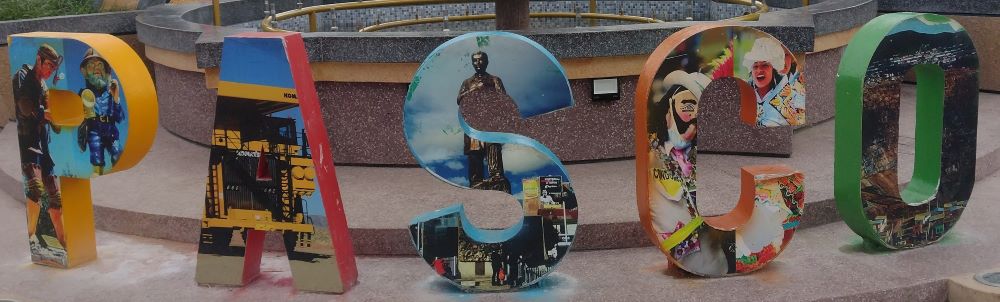
Cerro de Pasco, Perú has a population of about 59,000. Pasco is a mining town sitting at the top of the Andes Mtns, quite literally, at an elevation of 4330 meters (14,210 feet). I think of that white-capped mountain south of Seattle, Mt. Rainier, which is 14,410 feet, and try to compare - snow, ice, and glaciers on Mt. Rainier, at the same elevation in Perú is a city of close to 60,000 people. It's FRIGGIN' COld HERE! Some people think, and I saw a message posted on Facebook (a comment on something I posted) and the person wrote about all equatorial countries are hot. Apparently, he hasn't actually been to any equatorial countries, as I have now been in three of them, and I can tell you - Pasco is COLD, Bogotá is COLD, Quito is COLD. Being at the equator isn't the deciding factor in the temp, elevation is, and sitting on the equator, Quito sits at 2850 meters (9350 feet). Believe me, because I spent a week and a half in Quito, it's friggin' cold in that city. I also spent a week in Bogotá, 2640 meters/8660 feet, and it's very cold there, too. In another month or so I will visit La Paz, Bolivia, which sits at 3650 meters/11,975 feet, and I know it will be FRIGGIN' COLD. But, how can a person visit these countries and not visit those cities?
Read MoreHuánuco, Perú
February 10, 2023
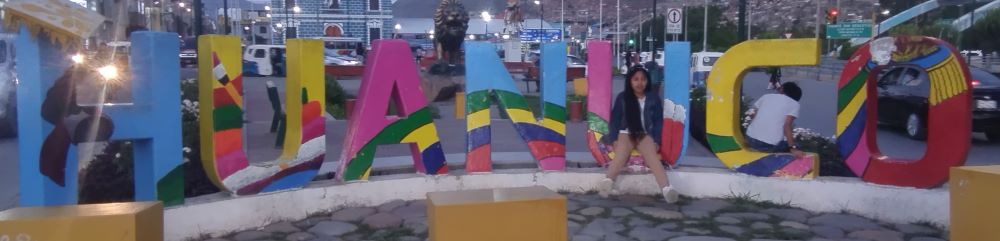
Huánuco, Perú: population: 236,000. Huánuco sits in a mountain valley at 1898 meters (6227 feet). It's a very pretty valley and quite close to the Amazon region. Huánuco was founded in 1539. The economy is based on sweet potatoes, beans, celery, cabbage, potatoes, cassavas, and many more vegetables, and many fruits including avocado, mango, bananas, papayas, oranges, lucuma, custard apple, guava, and more. Also, this area produces coffee, pineapple, coca, and sugar cane in the valleys. They also have mining, cattle ranching, oil production, and of course, commerce. The town has a large commercial center. As for interesting sites in the city, other than a couple of old churches there really isn't much of interest. Nothing to attract tourists, anyway. But, outside the city is a different story. One area of particular interest is "El Templo de las Manos Cruzadas" which means "The Temple of the Crossed Hands". It is also called The Temple of Kotosh. It is believed to be one of the oldest temples in the Americas, at about 4000 years old. A few kilometers south is the village of Huacar where you can find a church that dates back to about 1600 and routes to the archeological complex of Atash. You can also visit the Incan ruins and pre-Incan ruins in the area.
Read MoreJuanjuí, Perú
February 8, 2023
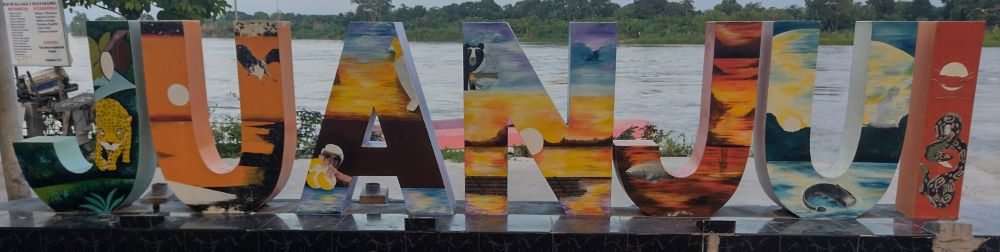
Juanjuí, Perú: population: 30,000, or about 35,000 for the entire metropolitan area. Juanjuí sits in a mountain valley at 283 meters (928 feet). It's a very pretty valley and quite close to the Amazon region. Juanjuí is the gateway into one of the national park Rio Abiseo and the ruins Gran Pajaté. The history of the region dates back to the Inca years, but it was in 1827 that the Spanish conquered the area and founded the town. The name Juanjuí is a contraction of the name Juan Huido. The Spanish founded the town with this name: Villa de Santa María de la Merced de Juanjuí, Sworn Protector of the Captives. The growth of the town didn't really take off until the highway was built in 1956, prior to which the airport was the only way to reach the town.
Read MoreTarapoto, Perú
February 4, 2023
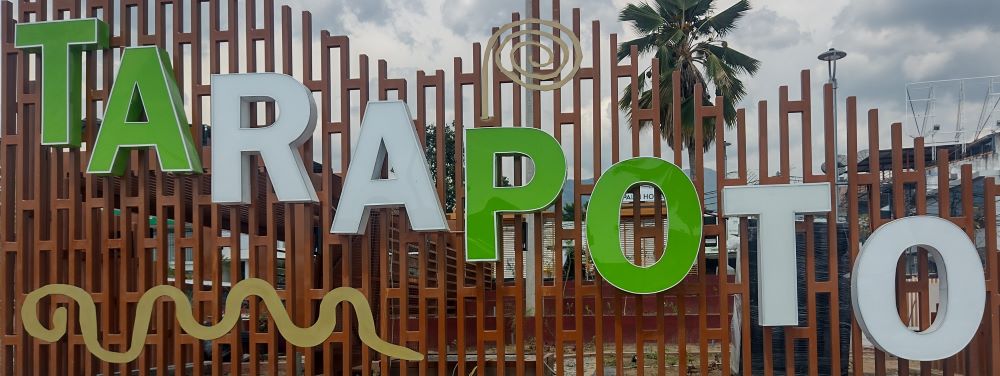
Tarapoto, Perú: Tarapoto was founded in 1782 with the full name of Santa Cruz de los Motilones de Tarapoto. Tarapoto is the main tourist town for people going into the Amazon. The town itself is nothing special, no interesting architecture, the parks are small and few and in need of a lot of attention. The traffic noise is terrible, as is the case pretty much everywhere in South America. People come here to use it as a jump-off point to the Amazon, not to visit the city itself. Besides bringing in tourist heading into the Amazon, Tarapoto's other main source of income is retail services and agriculture (coffee, corn, rice, cocoa, tobacco, and more). Outside the city, in the mountains nearby, you can find many waterfalls, lakes, rivers, climbing and hiking areas, and mountain biking trails.
Read MoreMoyobamba, Perú
February 1, 2023

Moyobamba, Perú: Moyobamba was founded in July of 1540 with the name Santiago de los Ocho Valles de Moyobamba. The town sits at the base of the eastern slopes of the Andes Mtns, in the Alto Mayo Valley. The population is around 55,000. Moyobamba has been used as a base for missionaries, soldiers, and merchants heading into the Amazon region. The Mayo River passes alongside the town and it has eight tributaries, hence the "ocho valles" part of its name - 8 valleys. The nickname of the city is "city of orchids" because, around the city, that is outside the city, one can find as many as 3500 species of orchids. At the end of October each year, the city celebrates an Orchid Festival. The name "Moyobamba" comes from the word "Muyu" of the Quechua language and means "circular", and "Pampa" which means "plain".
Read More
I used to teach English as a foreign language in Barranquilla, Colombia. Now I'm retired and traveling throughout South America.
I'm from Kennewick, Washington, USA. In my previous life, as I call it, I was an IT guy, systems administrator, computer tech, as well as a shipping/receiving guy and also worked as a merchandising guy in a RV/Camping store.