My Books on Amazon





There are 116 blog posts for you to enjoy.
Mala, Perú
February 23, 2023
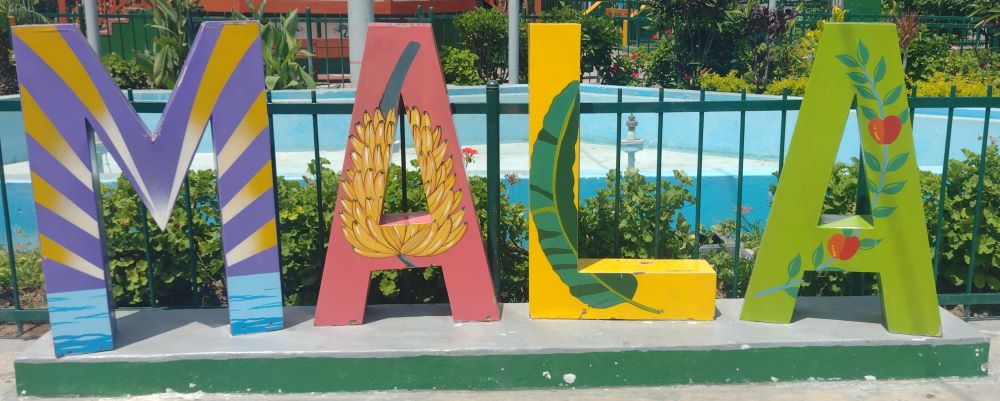
Mala, Perú: population: about 54,000. Mala is a small town a few kilometers away from the beaches of the Pacific Ocean. It is surrounded by hills that are actually very big sand dunes. The history goes back to pre-Inca times with the Huarco people who were eventually conquered by the Incas. In 1537 the Spanish conquistadors arrived and conquered the Incas and took over the area. Now the area has a large banana and platano industry, farming, as well as tourism and commercial services.
Mala has a desert climate. The average daytime high of 24° C (75° F), and the night average low of 15° C (59° F). The city's elevation is 30 meters (98 feet). Mala averages 109mm (4.3 inches) of rain per year.
Read MoreLima, Perú
February 21, 2023
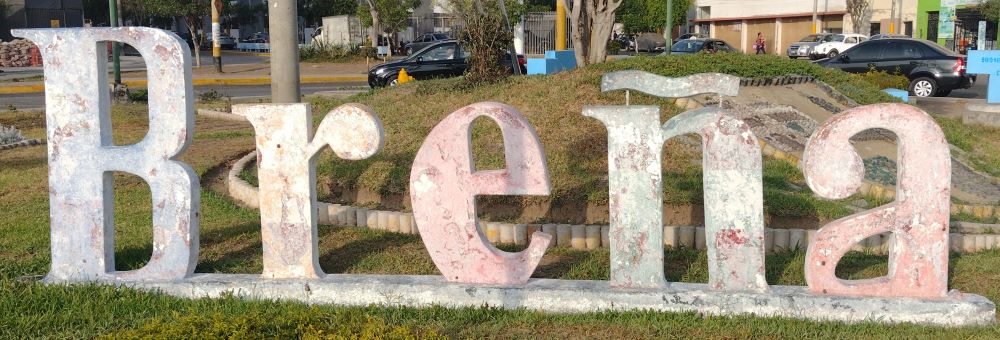
Lima, Perú: population: about 9.8 million for the city and the entire metropolitan area—11.3 million. Lima is a big city, one of the largest in the Americas. Lima was originally founded as "Ciudad de Los Reyes" (City of The Kings).
Lima has a desert climate, also said to be mild with subtropical temperature ranges. The average daytime high of 22° C (72° F), and the night average low of 17° C (63° F). The city's elevation ranges from sea level to more than 1500 meters (5000 feet). Lima averages 6.4mm (.25 inches) of rain per year. Yeah, that's right, a quarter of an inch of rain per year. That equates to an average of only 18 days a year in which a tiny bit of rain is recorded. Humidity is consistently between 80% - 85% throughout the year. Foggy mornings are common, and when I was on the bus entering the city it was quite foggy. Here's an interesting fact: Lima averages 1284 hours of sunshine annually. Compare that to London, England at 1653 hours and Moscow at 1731 hours. Yet, here it is in a desert along the coast near the equator.
Read MoreMazamari, Perú
February 18, 2023

Mazamari, Perú: population: about 30,000 for the entire metropolitan area. In 1873, Franciscan missionaries arrived and started cultivating coca and rubber. In 1913, there was an uprising by the native people and the missionaries were run out of the area. That was followed by an influx of immigrants from Austria, Hungary, and Germany. Between 1930 - 1940 the missionaries returned. They built a farmhouse, school, chapel, and airfield. In 1956, the airfield was finally officially opened after years of toiling at clearing the land. In 1958, a committee was formed to build a highway from Mazamari to Satipo. Since 1965 the airport has been used for training police paratroopers.
Read MoreSatipo, Perú
February 16, 2023

Satipo, Perú: population: about 30,000.
The valley where Satipo is located has been inhabited by various indigenous groups for more than 3500 years, based on the petroglyphs that have been found in the area. The Incas moved into the valley and there were wars which the Incas eventually won. The first European missionaries arrived in 1673. The native population wasn't much interested in what they had to offer and there were many uprisings against the missionaries into the 18th century.
Read MoreLa Merced, Perú
February 13, 2023

La Merced, Perú: population: about 25,000 (in the 2017 census). The Chanchamayo district (I believe a 'district' is similar to a county within a state) has a population of about 30,000 projected for 2020. The town was founded in 1635 by missionaries with the name "San Buenaventura de Quimiri". But, it was in 1869 that the town was officially founded and the name was changed to La Merced.
The valley where La Merced is located has been inhabited by various indigenous groups for centuries. Later, missionaries arrived and attempts at colonizing them started and continued until the middle of the 17th century. The missionaries found their work to be very challenging because the native people didn't want to be colonized. Several missionaries and colonists were killed which only resulted in even worse treatment from the colonizers. In 1742, the leader of the indigenous people, Atahualpa, got many tribes to work together and revolt against the colonizers. This caused them to give up on their attempts at colonizing for at least a century.
Read More
I used to teach English as a foreign language in Barranquilla, Colombia. Now I'm retired and traveling throughout South America.
I'm from Kennewick, Washington, USA. In my previous life, as I call it, I was an IT guy, systems administrator, computer tech, as well as a shipping/receiving guy and also worked as a merchandising guy in a RV/Camping store.