My Books on Amazon






There are 41 blog posts for you to enjoy.
The WRC Visited Trinidad, Paraguay
September 4, 2026
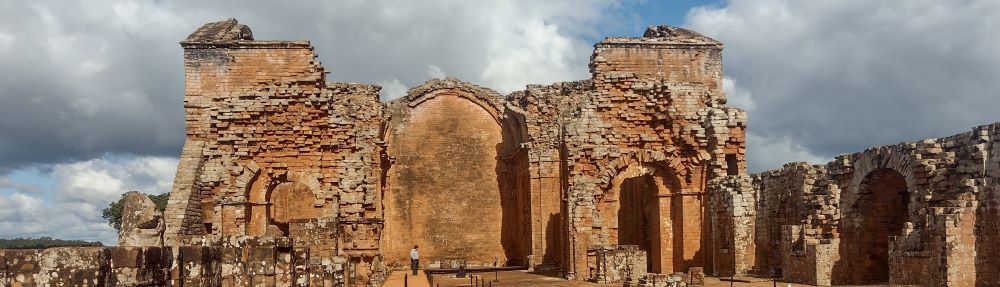 Trinidad, Paraguay, is a community, not even a pueblo (town), with a population of around 8000. It is home to Jesuit Ruins, which is a most interesting place to visit. And this past weekend, it was home to 4 stages of the WRC Paraguay Rally. I was at one of the stages and at the finishing area of a second. What a thing to watch! I've watched the rallies on TV for many years, but to see and hear them for real is an incredible experience. Read More
Encarnación - A Small City That is Very Pleasant to Visit
August 25, 2026

Encarnación, Paraguay - the city proper has about 84,000 people in its urban area, about 107,000 in its administrative district, and roughly 173,000 in the metropolitan/urban agglomeration. This was my fifth visit to Encarnación. That's about 4 1/2 months total. I guess you could say I like this town. It's a very pleasant place.
Read MoreVillarrica, PY - still a pleasant small city to visit
July 28, 2026
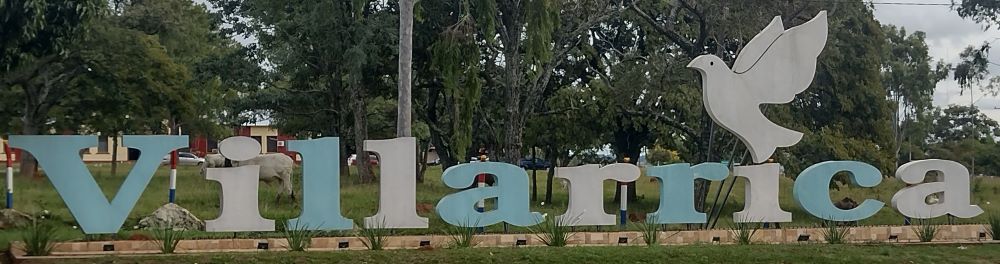
Villarrica, Paraguay - population around 75,000, sits at 200 meters (660 feet) elevation, and is located in the center of the souther part of Paraguay. The small city was founded in 1570, in what is now Brazil. But in the first 100 years the town was forced to relocate seven times, finally finding the current location in the center-south region of Paraguay. I wrote a blog on May 8, 2023, it can be found here.
Read MoreAreguá, Paraguay - home of the Strawberry Expo
July 24, 2026

Areguá, Paraguay - population of around 83,000, was founded in 1538. It sits at only 70 meters (230 ft) elevation. For whatever reason, in the wikipedia page it says "Areguá is thought to come from Classical Guarani (the language) ariguâ·r, meaning "person/people from above, from up there", refererring to the area's high altitude and its first inhabitants from the Mbya Guarani tribes. But, the English translation of the Spanish wikipedia page is not well done. Areguá's elevation is in relation to the lake, not elevated in the sense that anyone needs to acclimatize or bring an oxygen bottle. Lake Ypacaraí is roughly 64 meters above sea level, while my hostel is around 94 metres. The church and surrounding center of town are a bit higher, and a few neighborhoods are higher still. In Guaraní, ári refers to being above or on top, while -gua indicates origin or association with a place. The early Mbya inhabitants occupied the raised ground or loma alta west of the low-lying lake basin. Historical descriptions of the area actually use terms such as “loma de arriba” and “loma alta.” So they were “from above” relative to the lakeshore, wetlands, and surrounding basin, not relative to sea level.
Read MoreFrom the heat of the Amazon to the cold of the Andes
June 9, 2026
First, this blog is out of sequence. I wrote it and then forgot to add it to the schedule. So, here it is, a couple of months late.
Back on March 4, I arrived in Huancayo after spending about a month in Perú's Amazon region. It was warm, humid, and comfortable - T-shirt weather. Then I headed into the mountains. Since then, it’s been more than a month of higher elevations, colder air, and buildings with no heat. I don’t like the cold. Not just the outside cold, but the inside cold. The kind where you wake up and hesitate to leave the blankets because the room feels like a refrigerator.
Read More
I used to teach English as a foreign language in Barranquilla, Colombia. Now I'm retired and traveling throughout South America.
I'm from Kennewick, Washington, USA. In my previous life, as I call it, I was an IT guy, systems administrator, computer tech, as well as a shipping/receiving guy and also worked as a merchandising guy in a RV/Camping store.