My Books on Amazon






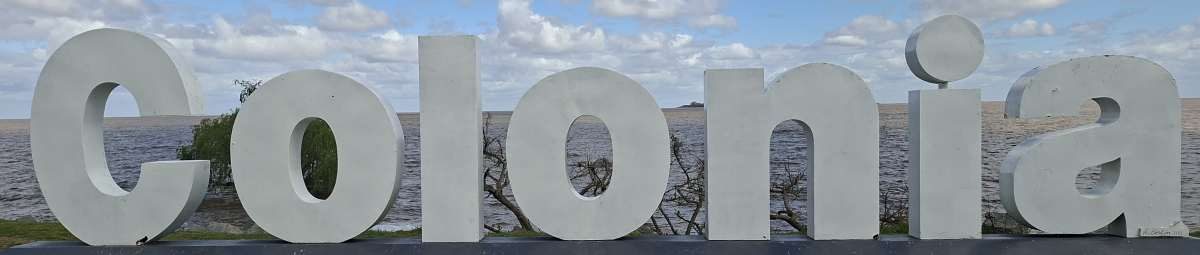
Colonia del Sacramento: Walls, Lighthouses and a Bullring
October 6, 2026
Colonia del Sacramento, Uruguay, has a population of about 33,000. It sits a couple of hours west of Montevideo. The town is very historic. The town's historic center is a UNESCO World Heritage Site. It's a small town sitting at the estuary where the Río de la Plata (the River Plate or the Plate River) dumps into the Atlantic Ocean. Google Maps has it labeled incorrectly at this part of the river. Also, this is where you cross from Uruguay to Argentina by ferry.
A Convoluted Mess of History
King Peter II of Portugal sent Manuel Lobo with 5 ships to this area with 400 soldiers, many skilled workers, and 18 cannons on board. They started building the town in January 1680. About 3 weeks later, José de Garro sent spies to the new outpost being built, telling the newcomers to leave. They refused. So, Garro sent a force of 3,400 men; they captured the fledgling town in the first week of August 1680. It came under the rule of Spain. Manuel Lobo was taken prisoner to Buenos Aires and died less than 3 years later. In 1681, Colonia was returned to Portuguese rule. During the 1690s, the town grew, and the wall was expanded, and they built a tower as well.
During the War of the Spanish Succession, 1701 to 1714, Colonia was pretty much all destroyed except for the churches and a bridge. In 1705, the colonists were evacuated on Portuguese ships. The colony was given back to Portugal in 1718, and they brought in a little over 1000 colonists. The 1720s saw great expansion, and Colonia became one of the richest and best defended towns in the region.
Between 1735 and 1737, there was yet another war, and it ended in failure for the Spanish. In 1750, there was a treaty drawn up, but it was never complied with, and eventually was considered null and void. In 1762, the governor was forced to surrender the colony to the Spanish, but it was handed back to Portugal the following year. If I understand this convoluted history correctly, it again switched hands. And in 1777 it was yet again switched to Spanish rule. And it continues - in 1816 it came under Brazilian rule. This happened when it was seized by the government of the United Kingdom of Portugal, Brazil and the Algarves and then renamed the Cisplatina province. It finally became part of an independent Uruguay in 1828.
What the Weather's Like
On average, the summer daytime highs hover between the mid-teens and high 20s C° (high 50s and low 80s F°). The winters generally see a range from around 7 to the high teens C° (mid-40s to mid-60s F°). The region sees an average of only 75 rainy days a year.
Walls, Lighthouses and a Bullring
The historic part of the city still has some of the original walls and the original entrance with a drawbridge door. There are many very old homes in this area (17th and 18th century), and as mentioned at the beginning, it is a UNESCO site. The historic center has some cobblestone streets built by the Portuguese in the 17th century, and is within walking distance of the town's ferry terminal and bus terminal. There are several museums in and near the historic center. The lighthouse, located within the ruins of a convent that dates back to the 17th century, was built in 1857. The main church, Basílica del Santísimo Sacramento, was built in 1808. The town's football (soccer) team was founded in 1917. The bullring stadium, which is quite impressive, was built in 1909, but in 1912 the country banned bullfighting, so the stadium was closed. It fell into disrepair until 2018, when a restoration project was begun. About half of the interior has been restored and is now a museum. The interior of the ring now holds occasional concerts and festivals. And Colonia has several ferry lines that serve Buenos Aires, Argentina. It is possible to go by bus, but that is a very long 400+ kilometer trip to get to a bridge and back to BA. If you need to rent a car, there are many auto rental agencies here, and some have microcars of various brands, and they're electric. Uruguay has many EVs and a government that is friendly to them.
Parrots, Beaches and a Long Walk
The town is quite a nice place to visit. It's easily walkable. Well, the main part contains the historic district and the downtown area. Walking across the small city to see the bullring is a 45-minute walk. I did it, mostly along the beaches and a trail alongside the river, so it was about an hour. But it is a very pleasant walk. You'll see Green Parrots in every park and just about every palm tree; well, you probably won't see them, but you will definitely hear them. One park I walked through had many of the noisy birds flying from tree to tree. I enjoyed my visit to Colonia, and recommend you add it to your list of places to see in Uruguay.

I used to teach English as a foreign language in Barranquilla, Colombia. Now I'm retired and traveling throughout South America.
I'm from Kennewick, Washington, USA. In my previous life, as I call it, I was an IT guy, systems administrator, computer tech, as well as a shipping/receiving guy and also worked as a merchandising guy in a RV/Camping store.